
SHAPING THE FUTURE OF GHANA’S ECONOMY THROUGH SUPPLY CHAIN, LOGISTICS AND TRANSPORT
19/11/2025REFLECTIONS
24/11/2025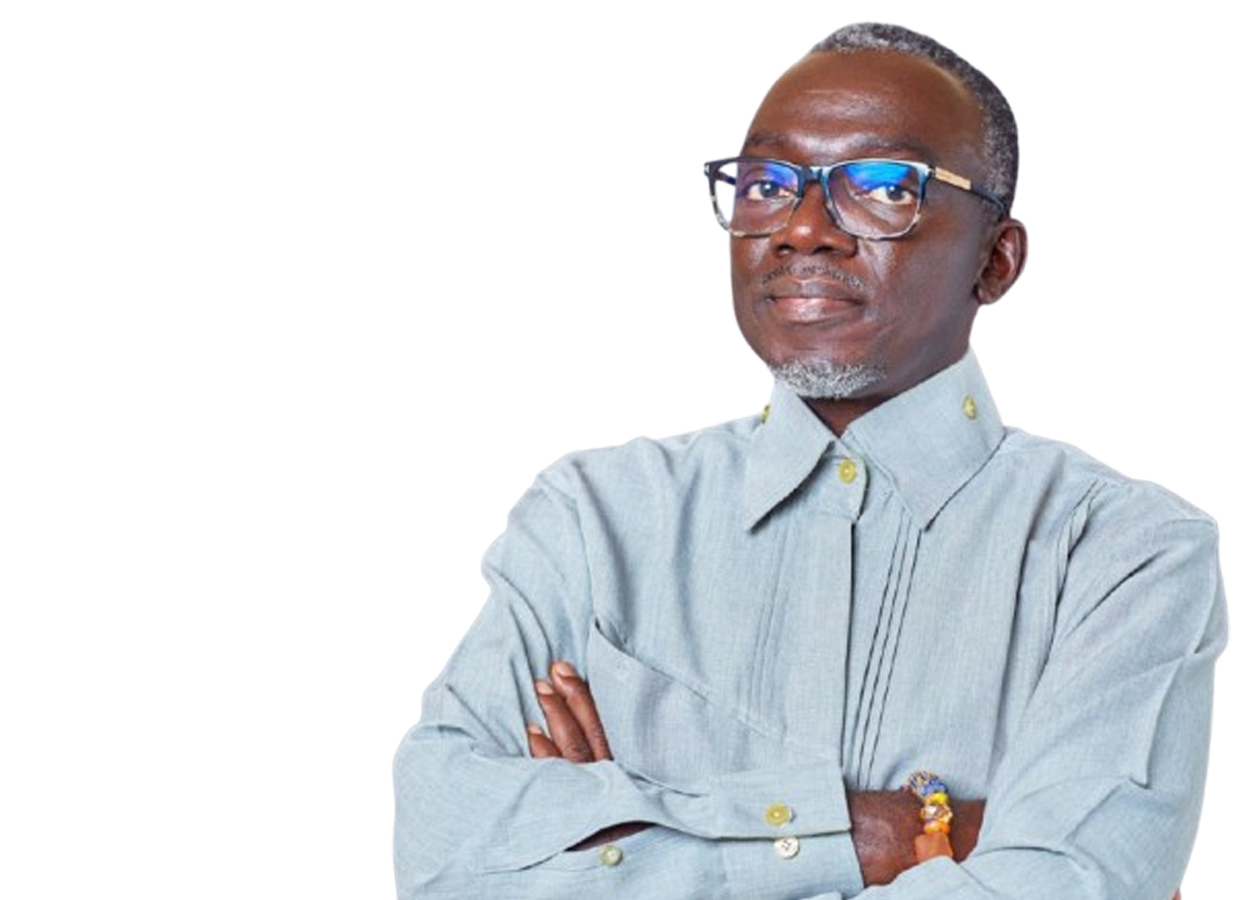
Delivered on behalf of
Chartered Director | Chartered Engineer | Social Entrepreneur | Governance and Industrialisation Strategist/Advocate| Generationalist |
Distinguished leaders, esteemed members of the Chartered Institute of Logistics and Transport, policy makers, captains of industry, honoured guests, and our newly inducted professionals, good afternoon.
There are moments in a nation’s journey when a gathering like this becomes more than a ceremony. It becomes a mirror that forces us to look honestly at who we are, what we have built, and what we must urgently transform. Today is one of those defining moments because we welcome into this noble profession a group of individuals whose future decisions will influence the direction of Ghana’s economy far more than they may realise.
Every great nation has its guardians. Some protect borders. Others protect institutions. But the guardians of long-term economic strength and the invisible architects of competitiveness are the men and women who plan, move, coordinate, store, distribute, and connect value. They are professionals like you. They are logisticians, supply chain thinkers, and transport stewards.
The world has never been shaped by the loudest voices. It has always been shaped by the most organised systems. Japan’s economic rise was driven by precision and coordination. Germany’s logistics sector powers Europe’s manufacturing engine and contributes heavily to its GDP. The United Arab Emirates transformed the desert into a global aviation and maritime hub through foresight, discipline, and vision in logistics.
Their stories remind us of a simple truth. Without logistics, development remains imagination. Without transport, opportunity becomes distance. Without supply chain governance, national ambition becomes empty rhetoric.
Ghana stands at a crossroads where these disciplines matter more than ever. The world is changing rapidly. Geopolitical tensions are rewriting global trade routes. Automation is reshaping factories. Climate challenges are altering agriculture. Digital technology is transforming consumer behaviour. The African Continental Free Trade Area is opening new continental corridors. In this evolving landscape, the winners will not be the richest countries but the most efficiently connected ones. Connectivity, not natural resources, will determine prosperity.
This is where your induction becomes significant.
You are becoming custodians of Ghana’s economic arteries. In your hands will rest the systems that determine whether food reaches markets at affordable prices, whether industries receive inputs on time, whether hospitals obtain critical supplies, whether farmers access buyers, whether exporters stay competitive, whether cities function efficiently, and whether Ghana’s economy breathes steadily or suffocates under inefficiency.
This responsibility is not ceremonial. It is national.
Every transport corridor you design, every procurement decision you approve, every distribution route you shape, every warehouse system you maintain, every contract you negotiate, and every ethical choice you make will echo far beyond your own desk. Your work will alter the trajectory of a nation still striving to convert potential into performance.
Let us be honest. Many of Ghana’s economic challenges are not simply financial or political. They are logistical. They arise from delays that increase costs, inefficiencies that weaken competitiveness, planning gaps that inflate prices, and governance weaknesses that drain public value. When roads deteriorate, farmers lose income. When ports slow down, factories suffer. When procurement fails, ministries underperform. When transport is unreliable, investment suffers. And when supply chains break, national development slows.
You are stepping into a profession that determines whether this country thrives or struggles.
Yet alongside the challenges lies a remarkable opportunity. Ghana has every advantage needed to become West Africa’s logistics nerve centre. We have stability, a strategic coastline, a major aviation hub, proximity to landlocked markets, an emerging industrial base, and the honour of hosting the AfCFTA Secretariat. What we need now is a generation of professionals who can convert these advantages into national wealth.
We must also accept a difficult truth. We cannot continue to plan in short cycles while the world plans in decades. The future will not be shaped by convenience but by courage. Countries that thrive treat logistics as national discipline, not an emergency response. They build systems that function regardless of who is in office. They empower institutions that endure. And they rely on professionals who put the nation first.
This is the ethos you must carry.
You are entering a profession that demands integrity, discipline, technical excellence, humility, and strategic foresight. Your badge today is not a decoration. It is a contract. A promise that you will uphold the standards of this institute, elevate the image of the profession, and serve Ghana with competence and conscience.
The world does not remember those who avoided responsibility. It remembers those who embraced it. Today, you join a global community of professionals whose work moves economies, builds nations, and saves lives.
As you rise in your careers, you will face temptations. You will encounter shortcuts and compromises. Resist them. When a country entrusts its supply chain systems to people who cut corners, it pays the price in inefficiency, loss of value, and rising poverty. Ghana deserves better. Today, Ghana is trusting you to deliver better.
Your responsibility is not simply to transport goods. It is to transport hope. Not merely to manage supply chains. It is to protect national values. Not only to move people. It is to move a country forward.
Allow me to leave you with a reflection.
A nation climbs only as high as the principles of those who guide its systems. If you lead with excellence, Ghana will move with excellence. If you create order, Ghana will find direction. If you insist on professionalism, Ghana will rise with professionalism. And if you think long term, Ghana will prosper long term.
Inductees, you have come far, but Ghana needs you to go further.
Lead boldly. Act ethically. Think generationally. Serve with pride. And remember that the future of Ghana’s logistics and transport ecosystem, its competitiveness, resilience, and prosperity now rests partly in your hands.
Congratulations. Serve well, serve wisely, and serve Ghana and the rest of Africa.
Thank you.
