
REFLECTIONS OF A NATION: PRESIDENT MAHAMA AND THE NDC CANNOT DO IT ALONE
12/11/2025CILT-INDUCTION SPEECH -NOV 2025
20/11/2025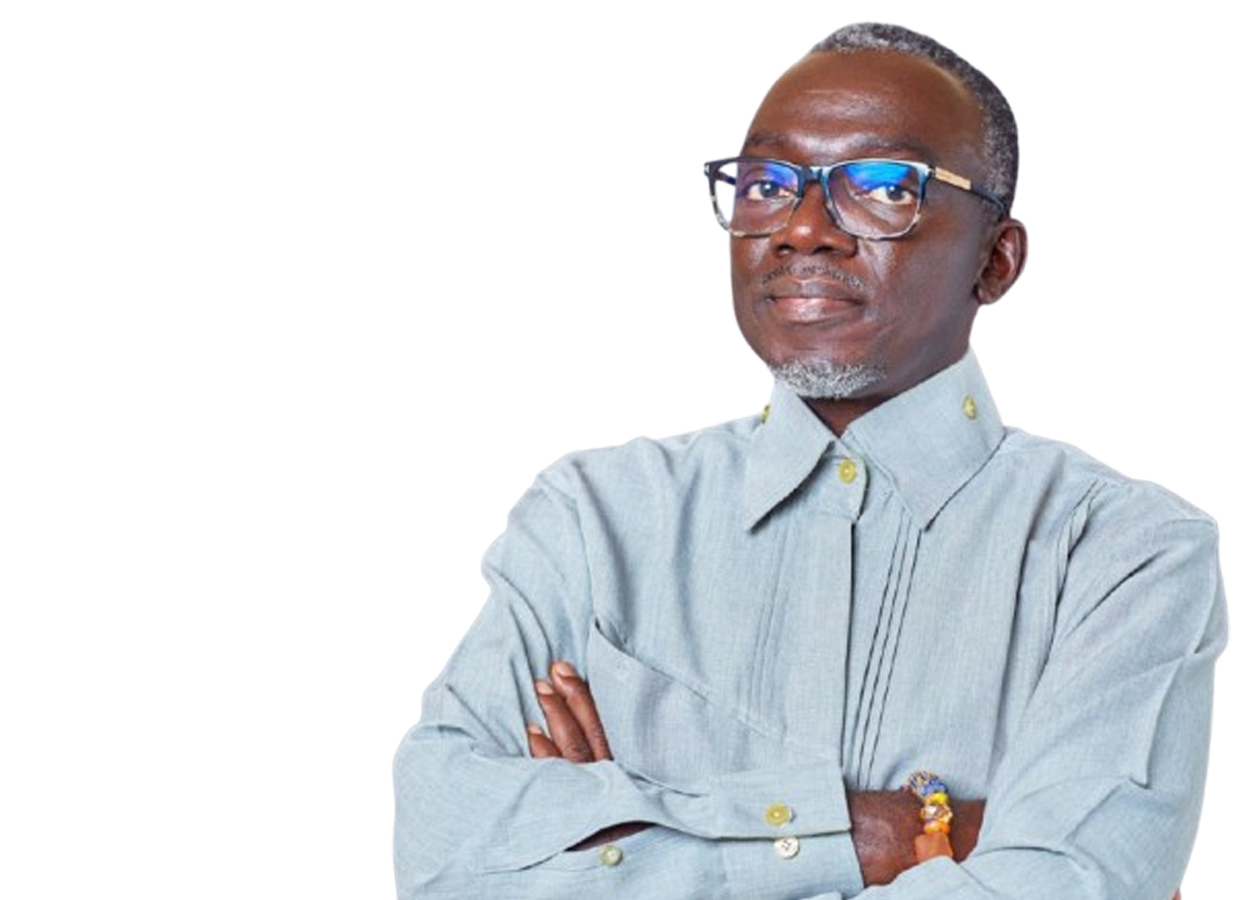
Delivered by Professor Douglas K. Boateng
19 November 2025
Hon minister and ministers, Distinguished policymakers, captains of industry, colleagues, and fellow Africans, Ghanaians, all protocols observed. Good morning.
Today’s gathering is more than just another conference. It is a quiet national self-assessment. It is an honest reflection on how far we have travelled and how much further we must go if we truly want to build a Ghana whose logistics, transport, and supply chain systems match the scale of our ambition.
I often remind leaders that nations do not rise by accident. Nations rise because they decide to organise themselves. The invisible engine behind every successful society is never politics. It is logistics. It is supply chain management. It is transport. It is the disciplined science of moving value efficiently from the place of creation to the place of need. This is the inconvenient truth we must now confront with courage.
The countries that transformed themselves did so by planning and implementing their way to prosperity.
In Africa, we are very good at planning but relatively very poor at implementing the plans.
When Singapore gained independence in 1965, it was dismissed as a swamp with no natural resources. Yet Lee Kuan Yew did something profound. He built a logistics nation. Today, Singapore handles more than 37 million TEUs of cargo, connects more than 600 ports across 123 countries, contributes more than 7 per cent to its GDP through logistics, and supports more than 200,000 jobs. Its success was not luck. It was a logistics discipline.
Similarly, the Netherlands became Europe’s gateway not because of size, but because of intentional design. Rotterdam evolved into Europe’s busiest port, while Amsterdam Schiphol Airport became an aviation logistics powerhouse. The Dutch understood early that value flows to where logistics flows.
Rwanda, once known more for conflict than commerce, also made a deliberate choice. The Kigali Logistics Platform reduced cargo clearance times from 11 days to less than 3, and drone logistics shortened medical delivery times from 4 hours to under 30 minutes. Once again, the pattern is clear. Logistics is economic destiny.
Ghana is not short of potential. Our location places us at the heart of one of the world’s busiest maritime corridors. Tema Port is among West Africa’s most advanced. Our road networks connect landlocked countries that rely on us. Kotoka International Airport is emerging as an aviation logistics hub. And the AfCFTA Secretariat chose Ghana because of trust and stability.
Yet potential can quickly expire when it is not converted into value.
Ghana’s logistics costs remain fifty to one hundred per cent above global benchmarks. Our farmers lose up to 40% of their produce due to weak supply chains. Our industrial parks struggle because transport and logistics costs erode competitiveness before goods leave the factory gates.
Ghana has been blessed by geography but constrained by execution. We have been gifted a natural advantage, but limited by generational planning and execution.
NyansaKasa reminds us that a path does not become a road until a nation walks it repeatedly with purpose.
It is also important to remember that Ghana did not start this journey empty-handed.
Kwame Nkrumah understood supply chain economics long before it became a global discipline. GIHOC was fundamentally about value addition, strategic sourcing, manufacturing, and distribution.
It was an early integrated supply chain ecosystem designed to ensure that Ghana would not rely on exporting raw materials while importing expensive finished goods.
His economic architecture linked agriculture, industry, transport, and distribution in a single development chain.
Many years later, the Gateway Project attempted to revive this vision by positioning Ghana as the Amsterdam of the ECOWAS region.
It aimed to create a logistics and economic corridor built on infrastructure, transport efficiency, warehousing, and long-term planning.
These were not four-year political cycles. They were generational designs. With discipline and continuity, that vision remains achievable.
The cost of weak supply chain governance in Ghana is significant. Port inefficiencies reduce national revenue by more than $1.2 billion annually.
Transport constraints push food prices up by fifteen to twenty-five per cent. Procurement leakages drain between twenty-five and thirty per cent of public value. Poor road maintenance increases logistics costs by more than 30%.
When supply chains weaken, poverty rises.
When logistics fail, competitiveness disappears.
This is why supply chain management is not a departmental function. It is a national survival infrastructure.
If Ghana is to shape its future, we must think differently.
We must act boldly and plan generationally.
Countries that built strong logistics systems did so deliberately. China invested in vast highways and rail networks. Ethiopia developed the Addis Djibouti Railway and dramatically reduced freight times. South Africa established a freight system that moves more than two hundred million tonnes annually.
Ghana must also build an integrated logistics backbone. This includes multimodal transport systems, national cold chain networks, industrial corridors, and a digital national supply chain platform. A country that cannot move goods efficiently cannot industrialise.
Transport must shift from being understood simply as vehicles and roads to being recognised as the movement of national value.
When transport systems work well, manufacturing becomes more competitive, food prices stabilise, tourism grows, exports expand, small and medium enterprises scale up, and investor confidence rises. Transport is not an administrative cost. It is a GDP catalyst.
The world’s best-run supply chain nations also professionalise governance.
Ghana must embed certified logistics and supply chain professionals across ministries, state-owned enterprises, local governments, and national agencies.
NyansaKasa teaches us that a leader who entrusts national resources to untrained hands should not be surprised when value disappears.
We must also embrace technology with discipline. Artificial intelligence, blockchain, predictive analytics, and digital twinning are transforming global logistics. AI routing reduces fleet costs by up to 20%.
Digital customs reduce clearance times by more than 60%. Electronic procurement increases transparency and boosts national revenue. Technology is no longer a luxury. It is the operating system of national competitiveness.
Most importantly, Ghana must cultivate a culture of long-term thinking. Infrastructure without maintenance becomes a museum of wasted ambition. Projects must outlive political cycles. Maintenance must be institutionalised. Continuity must be protected. Logistics planning must span forty years, not four. Nations rise when leaders plant trees whose shade they may never sit under.
With discipline and execution, Ghana can still become West Africa’s logistics capital.
We can strengthen our maritime gateway position.
We can anchor AfCFTA trade corridors.
We can become a regional transport and distribution centre.
We can lead the region in cold chain logistics.
We can establish ourselves as an aviation logistics hub.
We can drive industrialisation across the subregion through integrated supply chains.
We can become a global centre for supply chain education and certification.
This is not ambition. It is an achievable design.
I leave policymakers with this final reflection.
A nation does not rise because it has resources.
It rises because it organises those resources better than others.
If we organise our logistics systems, Ghana will rise.
If we strengthen our supply chain governance, Ghana will transform.
If we treat transport as national infrastructure rather than a political ornament, Ghana will industrialise.
If we adopt a generational mindset, Ghana will fulfil the promise that Nkrumah and the Gateway Project envisioned decades ago.
And so, my fellow Ghanaians, let us remind ourselves: we have come this far, and we can certainly go further.
Yes, Ghana can build a logistics nation.
Yes, Ghana can industrialise.
Yes, Ghana can create a future that generations yet to come will celebrate.
The future will not wait for Ghana.
Ghana must prepare itself to meet the future.
Let us begin, because it is possible.
Thank you, and may Ghana rise through discipline, strategy, and generational thinking.
